

In the dynamic world of tennis, the choice of a racket is a pivotal decision that can significantly influence a player's performance. One of the most debated aspects in this selection process is the weight of the racket. While heavy tennis rackets are often lauded for their power and stability, they are not without their drawbacks. As a tennis racket supplier, I've witnessed firsthand how the weight of a racket can both benefit and hinder players. This blog post will delve into the various disadvantages of using a heavy tennis racket, shedding light on factors that players and coaches should consider before making a choice.
Reduced Maneuverability
One of the most prominent drawbacks of a heavy tennis racket is the reduced maneuverability it offers. Maneuverability is crucial in tennis, especially when it comes to quick reactions and precise shot placement. A heavy racket requires more effort to swing and change directions, which can slow down a player's reaction time.
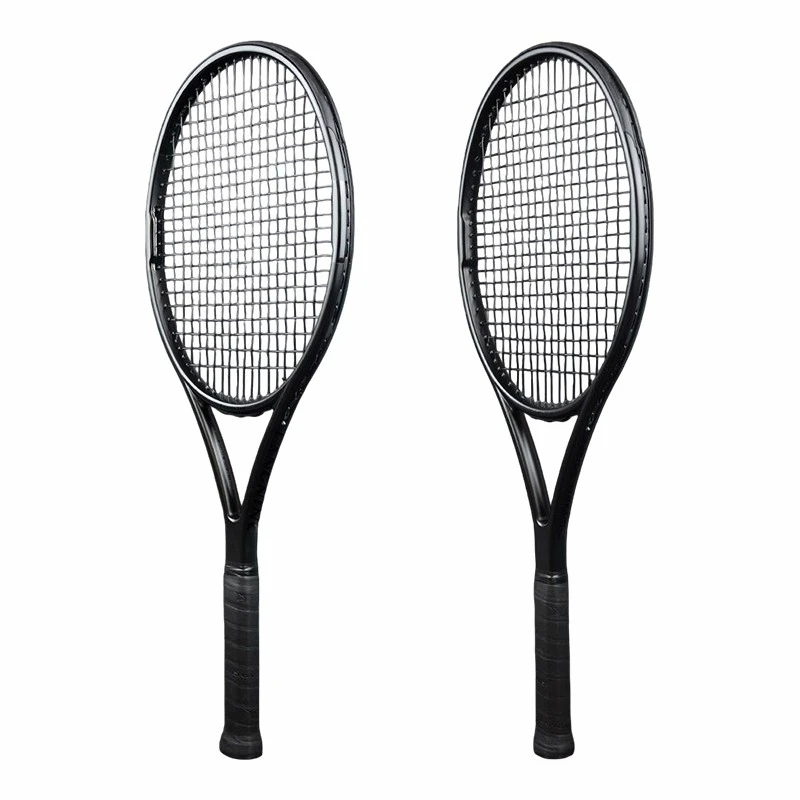

In fast - paced rallies, every millisecond counts. When a player needs to quickly adjust their swing to return a sharp cross - court shot or a lob, a heavy racket can be a hindrance. The extra weight makes it difficult to accelerate the racket head rapidly, resulting in slower swing speeds compared to a lighter racket. This can lead to mistimed shots, where the player is unable to connect with the ball at the optimal point in the swing arc.
For example, in doubles tennis, where players need to react quickly to volleys and short cross - court shots, a heavy racket can make it challenging to get the racket in position in time. Singles players also struggle with mobility around the court, as the added weight makes it harder to move the racket from one side of the body to the other during footwork drills and actual play.
Increased Fatigue
Another significant disadvantage of using a heavy tennis racket is the increased fatigue it causes. Tennis is a physically demanding sport that requires a high level of endurance, especially during long matches. A heavy racket places additional stress on the player's muscles, particularly in the arms, shoulders, and wrists.
During a match, a player may have to swing the racket hundreds of times. The continuous effort of swinging a heavy racket can lead to muscle fatigue much faster than with a lighter one. As fatigue sets in, the player's performance begins to decline. Their shot accuracy decreases, and they may start to experience pain and discomfort in their arms and shoulders.
Long - term, the repeated stress on the muscles and joints from using a heavy racket can also increase the risk of injuries such as tennis elbow, rotator cuff injuries, and wrist sprains. These injuries can sideline a player for extended periods and have a lasting impact on their tennis career.
Limited Adaptability to Different Playing Styles
Heavy tennis rackets are generally better suited for players with a powerful and aggressive playing style. However, this makes them less adaptable to other playing styles. Players who rely on finesse, spin, and quick shot changes may find a heavy racket difficult to use effectively.
For instance, players who prefer a defensive or counter - attacking style often need to be able to quickly change the direction and pace of their shots. A heavy racket restricts their ability to do so because of its slower swing speed and reduced maneuverability. They may struggle to add enough spin to the ball or to hit delicate drop shots with precision.
Players who are still developing their skills and are experimenting with different playing styles may find a heavy racket to be a limiting factor in their growth. It can prevent them from fully exploring the range of shots available in tennis and may slow down their learning process.
Difficulty in Control
Control is an essential aspect of tennis, allowing players to place the ball accurately in the desired area of the court. A heavy racket can make it more challenging to achieve precise control over the ball.
The extra weight of the racket makes it harder to fine - tune the swing and adjust the angle of the racket face at the moment of impact. This can result in shots that either miss the target or lack the desired depth and placement. For example, when trying to hit a topspin shot with a specific trajectory, a heavy racket may not allow the player to generate the necessary wrist and forearm movement to impart the right amount of spin and direction.
In addition, heavy rackets can be more difficult to handle in windy conditions. The larger surface area and weight of the racket make it more susceptible to the effects of wind, which can further disrupt the player's control over the ball.
Cost Considerations
When it comes to heavy tennis rackets, cost can also be a drawback. High - quality heavy rackets, especially those made from advanced materials like Full Carbon Fiber Tennis Racket, are often more expensive than their lighter counterparts.
The materials used in heavy rackets are typically of a higher grade to ensure durability and performance. Additionally, the manufacturing process for heavy rackets may be more complex, adding to the cost. This can be a significant barrier for novice players or those on a tight budget who may not be able to afford the latest and greatest heavy - duty rackets.
Even for experienced players, the cost of replacing a heavy racket can be a concern. If a racket gets damaged during play, the expense of purchasing a new one can be substantial, especially if they are looking for a high - end model.
Impact on Beginners
For beginners, using a heavy tennis racket can be a particularly challenging experience. Beginners are still in the process of learning the basic techniques of tennis, such as proper grip, footwork, and swing mechanics. A heavy racket can make it more difficult to master these fundamental skills.
The added weight makes it harder for beginners to feel comfortable with the racket and develop a consistent swing. They may struggle to generate enough power to hit the ball effectively, which can lead to frustration and a lack of confidence in their abilities. Moreover, the increased risk of fatigue and injury associated with heavy rackets can be especially problematic for beginners, who are more likely to have weaker muscles and less developed physical conditioning.
Conclusion
While heavy tennis rackets have their advantages in terms of power and stability, they also come with a number of drawbacks. Reduced maneuverability, increased fatigue, limited adaptability to different playing styles, difficulty in control, cost considerations, and the challenges they pose for beginners are all important factors to consider.
As a tennis racket supplier, I understand that the choice of a racket is a personal one that depends on a player's skill level, playing style, and physical capabilities. We offer a wide range of rackets, including Aluminum Alloy Tennis Racket and Full Carbon Fiber Tennis Racket, to meet the diverse needs of players. Our Best Tennis Racquets for Professional Players also provide excellent options for those looking for high - performance gear.
If you're in the market for a tennis racket and want to discuss which type is best for you, whether it's a heavy or lightweight option, we're here to help. Contact us to start a conversation about our products and how they can enhance your tennis experience.
References
- T. Luszczyk, “The influence of tennis racket construction on kinematic and anthropometric parameters of the impact force in topspin forehand stroke,” Journal of Human Kinetics, vol. 48, no. 1, pp. 141 - 148, 2015.
- F. Kovacs, “The effect of racket weight and balance on forehand stroke performance in tennis,” International Journal of Performance Analysis in Sport, vol. 16, no. 4, pp. 1143 - 1153, 2016.
- S. Werner et al., “Influence of racket characteristics on the technical execution of tennis strokes,” Sports Biomechanics, vol. 12, no. 3, pp. 257 - 268, 2013.